NVIDIA AI · Powered by RTX PRO
The full NVIDIA AI stack.
Running on your factory floor.
NVIDIA RTX PRO GPUs, NVIDIA Nemotron models, and NVIDIA NemoClaw — the agent-security stack that lets an autonomous agent run safely on a machine that also runs your line. All of it on a rugged Teguar box PC, in a 70 W envelope, with your data never leaving the building.
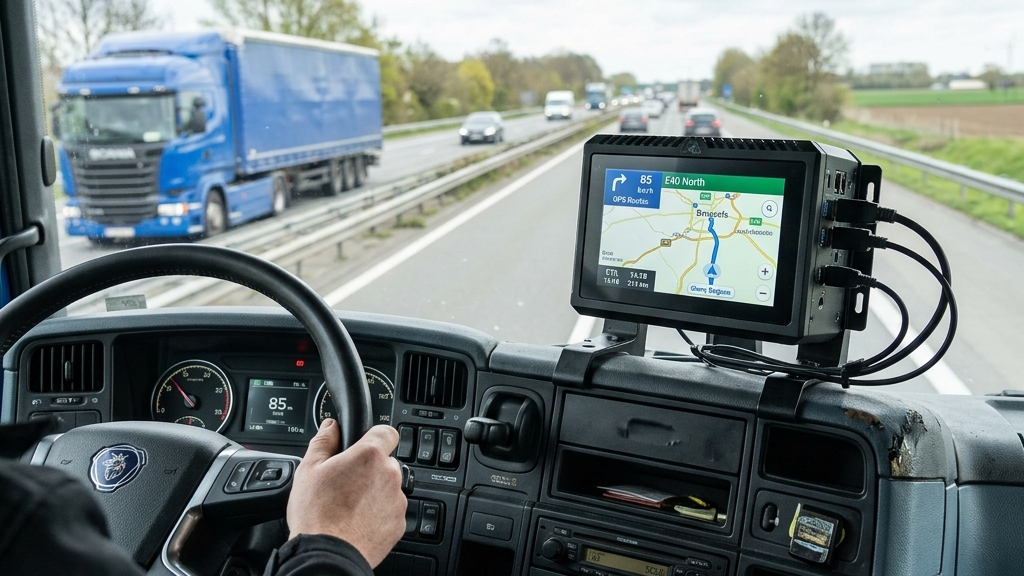
NVIDIA's own models, running on NVIDIA's own silicon
Nemotron 3 is NVIDIA's open model family for agentic AI — a hybrid Mamba-Transformer mixture-of-experts architecture built for exactly this job: high throughput, long context, and the ability to reason and call tools without a datacentre behind it. The weights are open and downloadable.
Nemotron 3 Nano 30B-A3B
Fits 24 GB- Parameters
- 31.6B total / 3.2B active (MoE)
- Architecture
- Hybrid Mamba-Transformer MoE
- Context
- Up to 1M tokens
- VRAM
- ~17-18 GB at 4-bit · ~32 GB at FP8
NVIDIA's flagship edge model, and the one to beat. Their published benchmarks put it above both GPT-OSS-20B and Qwen3-30B-A3B on accuracy, with 3.3x the inference throughput of Qwen3-30B-A3B on an 8K/16K workload. It is the natural local model for a NemoClaw agent.
Runs on the 24 GB RTX PRO 4000 SFF with a 4-bit quantization. NVIDIA's own FP8 checkpoint is roughly 32 GB and will NOT fit either card - you need a 4-bit build.
NVIDIA ships FP8 and BF16 checkpoints
Download weights →Nemotron 3 Super 120B-A12B
Needs a server- Parameters
- 120B total / 12B active (LatentMoE)
- Architecture
- Hybrid Mamba-2 + Latent MoE, NVFP4-trained
- Context
- Up to 1M tokens
- VRAM
- Enterprise-class - multiple datacentre GPUs
Built for collaborative agents and high-volume workloads like IT ticket automation. Relevant to your roadmap, not to a fanless box PC. Use the Privacy Router to reach it in the cloud while Nano handles the sensitive work locally.
Does NOT fit a 16 GB or 24 GB workstation card. NVIDIA positions Super for 2-4x A100-class GPUs (or 2x B200). Listed here for completeness - if you need Super, you need a server, not an edge box.
NVIDIA ships BF16 and NVFP4 checkpoints
Download weights →Let an agent act — without letting it loose
An autonomous agent that can run commands on a machine controlling your production line is a serious security question, not a demo. NemoClaw is NVIDIA's answer: a kernel-level sandbox, a local Nemotron model, and a privacy router that decides what is ever allowed to leave the box. It installs with a single command.
NVIDIA NemoClaw
NVIDIA's open reference stack for running always-on AI agents safely. It combines OpenShell (a kernel-level sandbox runtime), Nemotron models running locally, and a Privacy Router that decides per-request whether something stays on-device or is allowed out to a frontier model. Deploys with a single command, and adds policy-based privacy and security guardrails around the agent. Adobe, Salesforce, SAP, Dell, Cisco and LangChain are building on it.
NemoClaw on GitHub →OpenShell
The kernel-level sandbox inside NemoClaw. An autonomous agent that can run shell commands is a genuine security problem; OpenShell is the containment layer that makes it deployable on a machine that also runs your line. Agents like Hermes, LangChain Deep Agents and OpenClaw run inside it.
NemoClaw docs →Privacy Router
Routes each request to a local Nemotron model or out to a cloud frontier model based on your policy. This is the piece that makes edge AI practical in a regulated environment: sensitive prompts never leave the box, while non-sensitive work can still reach a bigger model when you want it to.
NemoClaw overview →NVIDIA NIM
Prebuilt, GPU-optimised inference containers that expose an OpenAI-compatible endpoint. The fastest route from 'we bought the box' to 'our apps are calling it' - point your existing OpenAI-API client at the machine on your own network.
Explore NIM →Prompt hits the Privacy Router on your box
Sensitive? Nemotron answers locally on the RTX PRO GPU
Agent acts inside the OpenShell sandbox
Nothing regulated ever leaves the building
The GPUs, and what each one can actually run
VRAM is the constraint that decides everything at the edge. Below is every NVIDIA card we offer, with the models that fit it. Footprints assume 4-bit quantization and a modest context window — allow headroom for longer context.
RTX PRO 2000
16 GBNVIDIA RTX PRO 2000 Blackwell
- Memory
- 16 GB GDDR7 (ECC)
- CUDA cores
- 4,352
- Bandwidth
- 288 GB/s
- AI performance
- 545 AI TOPS
- Power
- 70 W
The efficient choice. Enough VRAM for a 20B-class MoE model or several concurrent vision streams, at a 70 W power budget that a fanless rugged chassis can actually dissipate.
gpt-oss-20b
21B total / ~3.6B active (MoE) · MXFP4 · ~13-14 GB
Medical & regulated environments
Also runs: Qwen3-14B, Qwen2.5-VL-7B, Llama 3.1 8B Instruct
RTX PRO 4000 SFF
24 GBNVIDIA RTX PRO 4000 SFF Blackwell
- Memory
- 24 GB GDDR7
- CUDA cores
- 8,960
- Bandwidth
- 432 GB/s
- AI performance
- 770 AI TOPS
- Power
- 70 W
Twice the cores and 50% more VRAM in the same 70 W envelope. This is the card to pick if you want a 30B-class MoE agent with real context length, or vision plus language on one box.
Qwen3-30B-A3B
30B total / ~3B active (MoE) · Q4_K_M · ~18-19 GB
Industrial & factory automation
Also runs: gpt-oss-20b, Qwen3-14B, Qwen2.5-VL-7B, Llama 3.1 8B Instruct
RTX 2000 Ada
16 GBNVIDIA RTX 2000 Ada Generation
- Memory
- 16 GB GDDR6
- CUDA cores
- 2,816
- Bandwidth
- 224 GB/s
- AI performance
- 191.9 AI TOPS
- Power
- 70 W
Previous-generation Ada silicon, included as standard on the ABB Eyemotion build. Proven, widely supported, and still very capable for vision inference and mid-size language models.
gpt-oss-20b
21B total / ~3.6B active (MoE) · MXFP4 · ~13-14 GB
Medical & regulated environments
Also runs: Qwen3-14B, Qwen2.5-VL-7B, Llama 3.1 8B Instruct
Recommended models, by vertical
Every model below is open-weight and downloadable — you own the deployment. MoE models are flagged: they activate only a fraction of their parameters per token, which is why a 30B model can run at the speed of a 3B one.
| Model | Parameters | VRAM (4-bit) | Runs on | Best for | Weights |
|---|---|---|---|---|---|
| gpt-oss-20b MoE | 21B total / ~3.6B active (MoE) | ~13-14 GB | RTX PRO 2000, RTX PRO 4000 SFF, RTX 2000 Ada | Medical & regulated environments Apache 2.0 licensed and small enough to run comfortably in 16 GB, so PHI and patient data never leave the building. Good tool-calling makes it a solid backbone for a clinical documentation or EHR-lookup agent. | Download → |
| Qwen3-30B-A3B MoE | 30B total / ~3B active (MoE) | ~18-19 GB | RTX PRO 4000 SFF | Industrial & factory automation 30B-class reasoning at 3B-class speed. On the 24 GB RTX PRO 4000 SFF this leaves room for a real context window - long enough to hold equipment manuals, SOPs and fault histories for a maintenance copilot. | Download → |
| Qwen3-14B | 14B (dense) | ~9-10 GB | RTX PRO 2000, RTX PRO 4000 SFF, RTX 2000 Ada | In-vehicle & remote sites Dense, predictable and light. Leaves plenty of VRAM headroom for a vision model running alongside it - useful when the box is also doing camera work and there is no cloud link to fall back on. | Download → |
| Qwen2.5-VL-7B | 7B vision-language | ~6-8 GB | RTX PRO 2000, RTX PRO 4000 SFF, RTX 2000 Ada | Machine vision & quality inspection Reads what the camera sees. Pairs naturally with the TB-7145-MVS: describe a defect, read a label or gauge, or answer questions about a frame without shipping images off-site. | Download → |
| Llama 3.1 8B Instruct | 8B (dense) | ~5-6 GB | RTX PRO 2000, RTX PRO 4000 SFF, RTX 2000 Ada | General on-prem endpoint The safe default. Small, fast, extremely well supported by every runtime, and cheap enough on VRAM to run several instances or serve many concurrent users from one box. | Download → |
VRAM figures are approximate working footprints at 4-bit quantization with a modest context window. Longer context, larger batches and higher-precision quantization all increase usage.
What people actually build with these
Local agents and private AI endpoints, in the places where a cloud API is either too slow, too expensive, not allowed, or simply not reachable.
Private clinical assistant at the bedside
Run gpt-oss-20b on-prem behind the hospital firewall and expose it as an OpenAI-compatible endpoint. Clinicians query patient history, summarise notes and draft documentation - and no PHI ever crosses the network boundary, which removes an entire class of compliance problem.
gpt-oss-20b · vLLM or Ollama · OpenAI-compatible /v1/chat/completions
Maintenance copilot on the plant floor
Index equipment manuals, SOPs and historical fault tickets into a local vector store, then let a Qwen3-30B-A3B agent answer 'why is line 3 throwing this fault?' It reads PLC tags over the CANBus and serial expansions, so it can look at live state, not just documents.
Qwen3-30B-A3B · local RAG · CANBus / GPIO expansion
Vision QA that explains itself
A classical vision model flags a defect; the VLM explains it in plain language and logs the reason. Operators get 'solder bridge on pin 14' instead of a bare reject code, and the inspection loop stays entirely on the machine - no round trip to a cloud API for every frame.
Qwen2.5-VL-7B · GigE / USB3 cameras · TB-7145-MVS
Offline agent in the vehicle
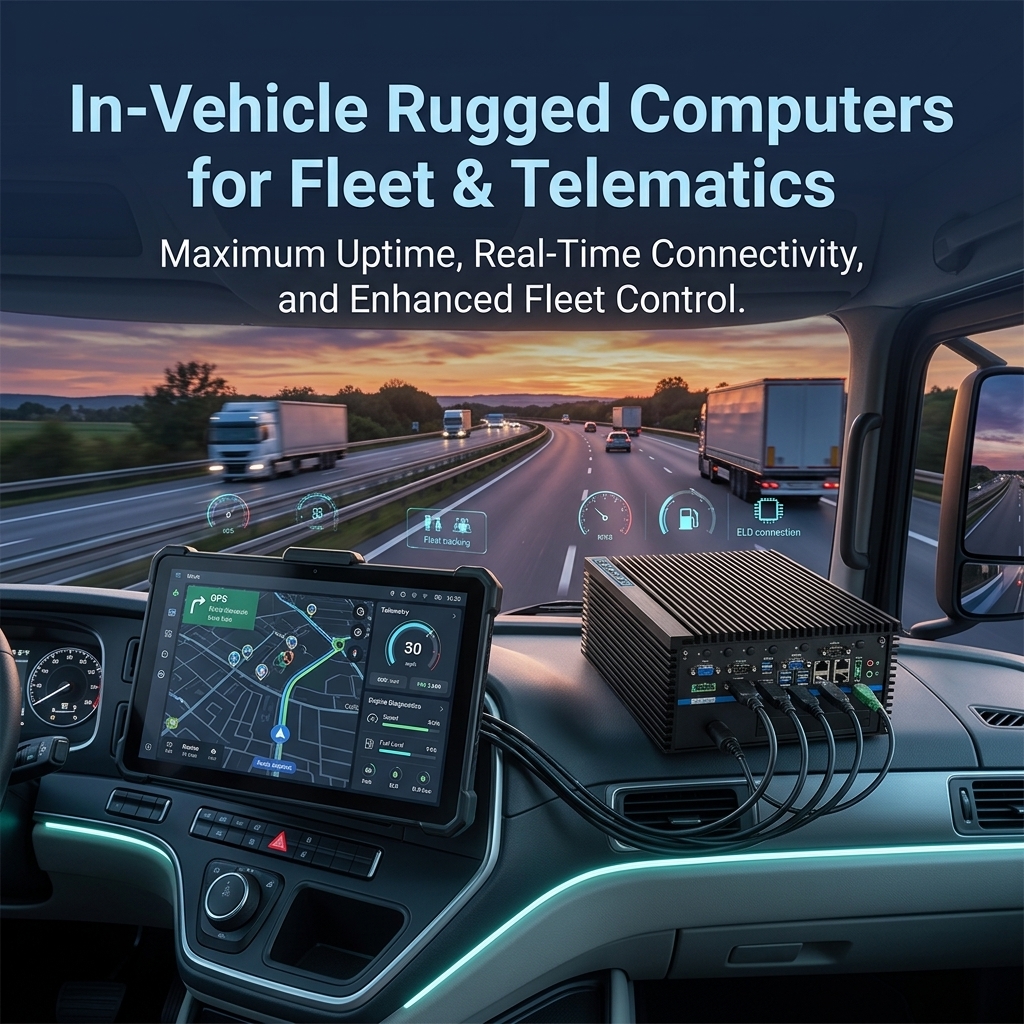
Connectivity is intermittent in a tunnel, a mine or a rural depot - so the agent cannot depend on it. A local model handles driver queries, inspection checklists and telemetry summarisation, then syncs findings opportunistically when a link comes back.
Qwen3-14B · local tool calling · store-and-forward sync
An AI endpoint your other apps can call
Serve the model as an OpenAI-compatible HTTP endpoint on the local network. Existing tools that already speak the OpenAI API - dashboards, SCADA integrations, internal apps - point at your box instead of a cloud provider. No code rewrite, no per-token bill, no data leaving the site.
vLLM · Ollama · llama.cpp server
GPU-ready systems
Every Teguar system that takes an NVIDIA GPU. Prices are the base system; the GPU is a configurable option shown against each model.
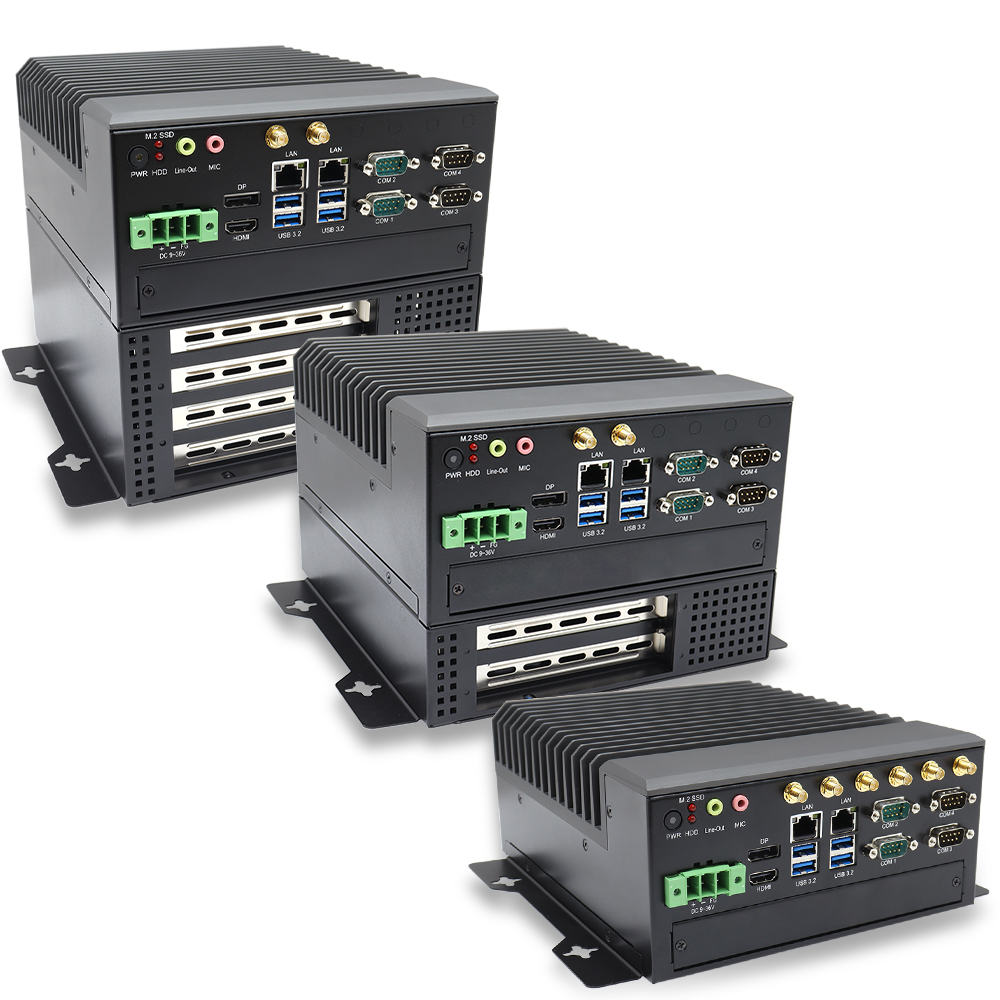 TB-7145-MVS
 Rugged AI Platform PC
From $2,088.20
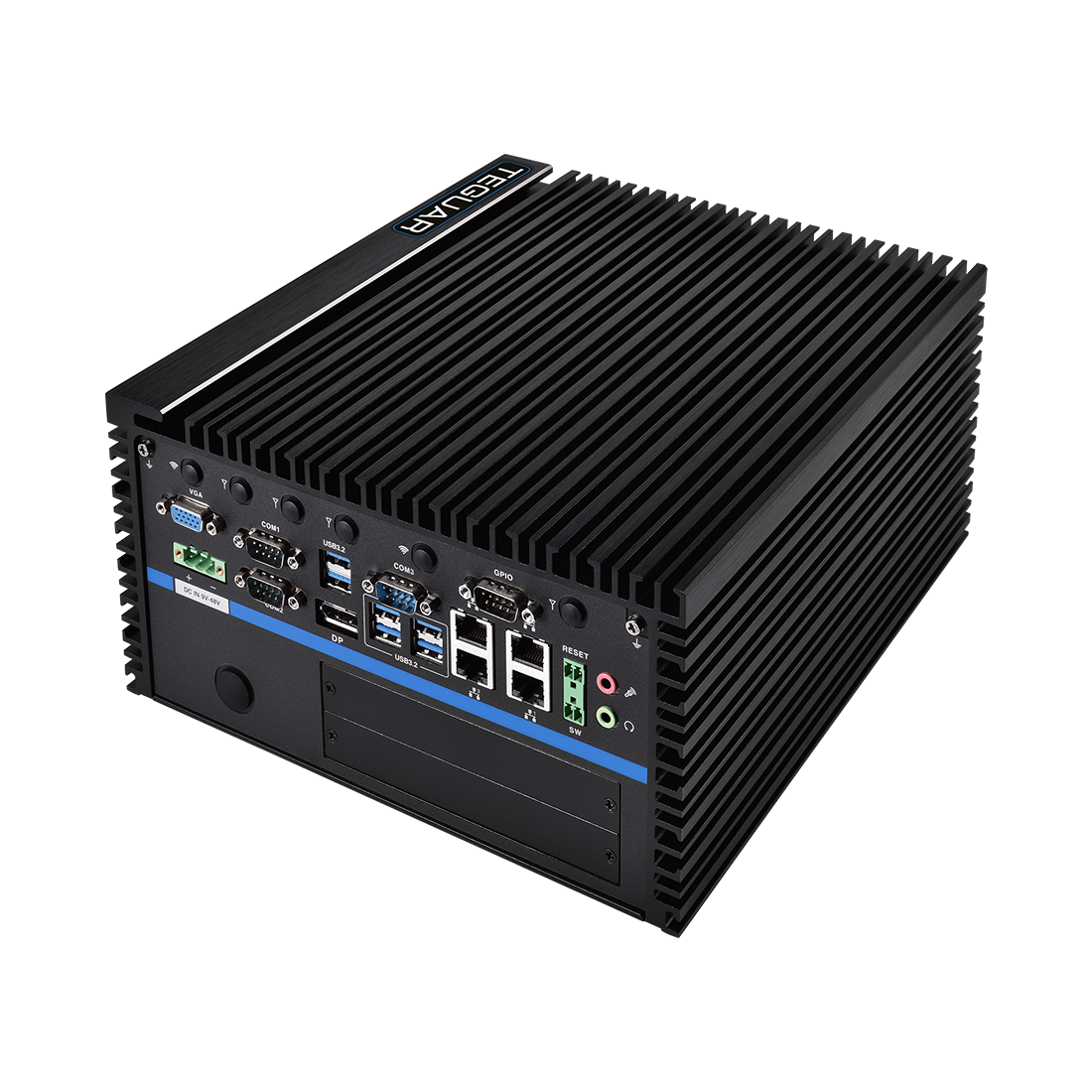 REGIS TB-7393
 Rugged AI Box PC
From $2,238.72
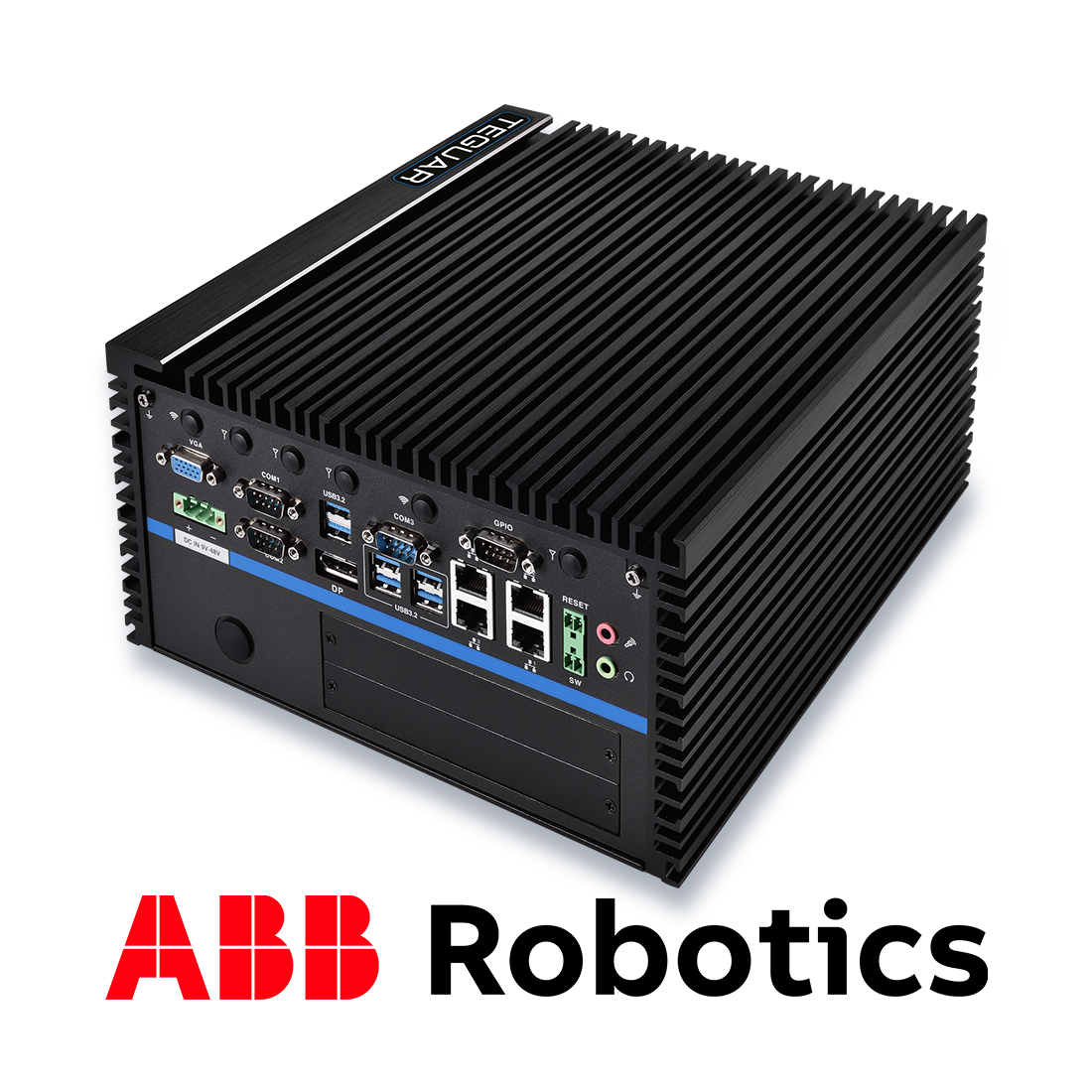 REGIS TB-7393-ABB
 ABB Eyemotion Compatible Rugged AI Box PC
From $5,708.10
Questions
Can I run a local LLM on an industrial PC?
Yes. With an NVIDIA RTX PRO GPU fitted, a Teguar rugged box PC will run a 20B-class mixture-of-experts model entirely on-device. You serve it as an OpenAI-compatible endpoint on your own network, so no data leaves the site and there is no per-token cost.
How much VRAM do I need to run a local AI model?
As a rule of thumb at 4-bit quantization: an 8B model needs roughly 5-6 GB, a 14B model roughly 9-10 GB, a 20B mixture-of-experts model roughly 13-14 GB, and a 30B MoE model roughly 18-19 GB. Add headroom for context length. That puts 20B-class models within reach of a 16 GB card and 30B-class MoE models on a 24 GB card.
What is a mixture-of-experts (MoE) model and why does it matter at the edge?
An MoE model only activates a small fraction of its parameters for each token - for example Qwen3-30B-A3B has 30B total parameters but activates about 3B per token. You get the quality of a large model at roughly the inference speed and compute cost of a small one, which is exactly the trade-off you want on a 70 W edge GPU.
Which NVIDIA GPU should I choose?
Choose the RTX PRO 2000 (16 GB) for vision workloads and models up to about 20B parameters. Choose the RTX PRO 4000 SFF (24 GB) if you want a 30B-class MoE agent with a long context window, or need to run vision and language models side by side. Both draw only 70 W.
What is NVIDIA NemoClaw?
NemoClaw is NVIDIA's open reference stack for running always-on AI agents safely. It combines OpenShell (a kernel-level sandbox runtime), Nemotron models running locally, and a Privacy Router that decides per-request whether a prompt is handled on-device or allowed out to a cloud model. It deploys with a single command and adds policy-based privacy and security guardrails around the agent.
Can I run NVIDIA Nemotron 3 on a Teguar industrial PC?
Nemotron 3 Nano (30B-A3B, 31.6B total / 3.2B active) runs on the 24 GB RTX PRO 4000 SFF using a 4-bit quantization, at roughly 17-18 GB. Note that NVIDIA's own FP8 checkpoint is about 32 GB and will not fit a 16 GB or 24 GB card - you need a 4-bit build. Nemotron 3 Super (120B-A12B) is a datacentre model and does not fit these systems at all.
Do I need an internet connection to run these models?
No. Once the model weights are downloaded to the machine, inference runs entirely offline. This is the main reason customers deploy edge AI: it works in tunnels, mines, factories and vehicles where connectivity is unreliable, and it keeps regulated data on-premises.
Not sure which card you need?
Tell us the model you want to run and the environment it has to survive. We build to order and we will size the GPU and thermals for you.
Request a quote