Blog
Medical-Grade Computer vs Consumer PC: What's the Difference?
Teguar Editorial Team · July 5, 2026
An off-the-shelf all-in-one looks cheaper on the purchase order — until you weigh it against the requirements of a room with patients in it. Medical-grade computers exist because clinical environments impose demands that consumer hardware was never designed to meet. This paper lays out exactly where the two diverge, why each difference matters for safety and total cost, and when a standard PC is genuinely fine.
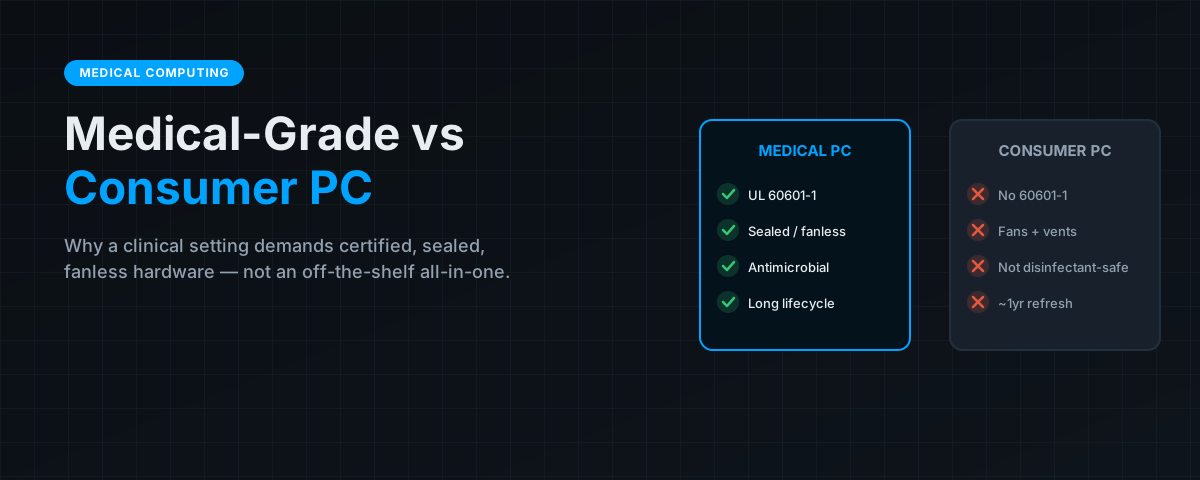
The temptation is understandable: a consumer all-in-one with the same processor can cost a fraction of a medical panel PC, and on a spec sheet the CPU, RAM and storage look identical. But a medical computer is not priced for its compute — it is priced for everything around the compute: patient-safety certification, an enclosure that survives disinfection, cooling that doesn't move contaminated air, and a lifecycle measured in years rather than months. Ignore those and the cheaper unit becomes the more expensive decision.
Key takeaways
- Medical-grade computers carry UL/IEC 60601-1 certification for electrical safety near patients — consumer PCs do not, and using an uncertified device in a patient environment can breach facility and regulatory requirements.
- Medical units are sealed and fanless so they can be wiped down with hospital disinfectants and don't draw contaminated air across electronics; consumer PCs have fans, vents and seams.
- Medical hardware offers a long, stable lifecycle (years of identical validated units); consumer models change silently and are refreshed annually.
- A consumer PC may be fine for back-office and administrative use away from patients — the distinction is proximity to the patient and exposure to cleaning.
The core divide: proximity to the patient
Every difference below flows from one fact — a medical computer operates in or near the patient vicinity and is cleaned like a clinical surface, while a consumer PC was designed for a desk. That single change of context is what turns a list of "nice to have" features into hard requirements.
Electrical safety: UL/IEC 60601-1
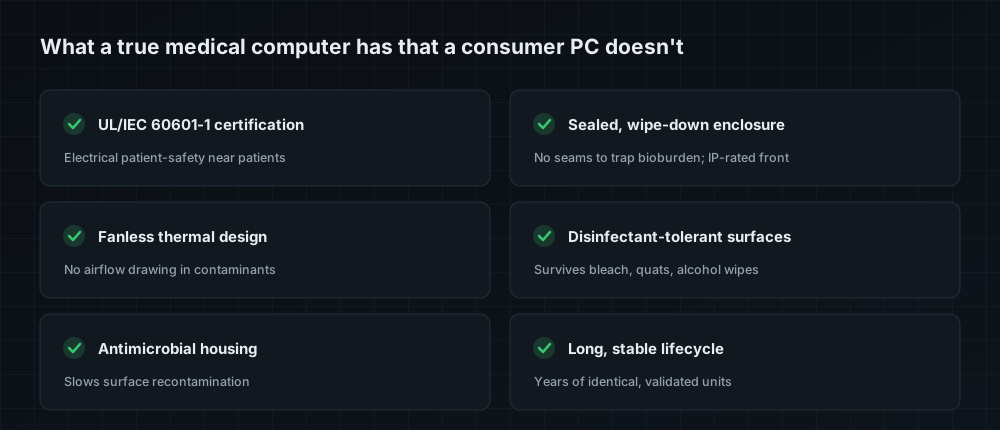
The defining difference is certification. IEC 60601-1 (and its UL equivalent) is the international standard for the basic safety of medical electrical equipment. It governs leakage current, isolation, and fault behaviour so that a device near a patient cannot deliver a dangerous current — including through a clinician touching both the patient and the equipment. Consumer PCs are built to ordinary IT safety standards (IEC 62368-1), which do not address patient-contact leakage limits. In many facilities, placing an uncertified computer in the patient environment is not permitted, full stop. See our 60601-1 explainer for what the certification actually covers.
If a computer will be within reach of a patient or the people touching them, 60601-1 is not optional — it is the gating requirement before any other spec matters.
Enclosure and cleanability
Clinical surfaces are disinfected constantly, and the computer is one of them. A medical panel PC has a sealed, flat-front enclosure (often IP65 on the bezel) with a flush projected-capacitive screen and no seams or fan grilles to trap bioburden — so a clinician can wipe every exposed surface with a hospital-grade disinfectant. A consumer all-in-one has ventilation slots, plastic seams and a bezel-and-panel gap that both harbour contamination and are damaged by repeated bleach or alcohol wipes. Over months, the consumer unit becomes both a hygiene liability and a warranty problem.
Cooling: fanless versus fan-cooled
Consumer PCs use fans, which in a clinical setting is a double problem: the fan draws air — and airborne contaminants — across the internal electronics and out again, and the vents themselves collect dust and are impossible to disinfect. A medical computer is fanless, cooling passively through the chassis with no vents at all. That is quieter at the bedside, cleaner, and more reliable because there is no moving part to fail. (We cover this trade-off in depth in why choose a fanless computer.)
Antimicrobial surfaces
Most medical housings add an antimicrobial treatment that slows how quickly a disinfected surface repopulates with microbes. It is a supplementary layer rather than a primary control, and its real value depends on the enclosure already being sealed and cleanable — we unpack the evidence in do antimicrobial medical computers reduce infections? Consumer PCs offer nothing of the kind.
Lifecycle and validation
Healthcare deployments need consistency. When a hospital validates a computer for an imaging cart or an EHR workstation, it needs to buy the identical unit for years so every deployment behaves the same. Industrial and medical manufacturers commit to long lifecycles and change-notification; consumer models are quietly revised every few months and discontinued within a year, forcing re-validation each time. Over a fleet's life, that churn dwarfs the upfront price gap.
Cost, honestly
A medical computer costs more upfront, and that is the whole and honest trade. What you buy for the premium is regulatory compliance, a device that survives daily disinfection, cleaner and more reliable cooling, and years of identical units. Weighed over a multi-year fleet — including failures, cleaning damage, re-validation and compliance risk — the purpose-built unit is usually cheaper in total, not more expensive.
| Attribute | Medical-grade computer | Consumer PC |
|---|---|---|
| Patient-safety certification | UL/IEC 60601-1 | IT safety only (62368-1) |
| Enclosure | Sealed, flat, IP-rated front | Vented, seamed |
| Cooling | Fanless, no vents | Fan + vents |
| Disinfection | Wipe-down safe surfaces | Degrades with hospital wipes |
| Antimicrobial housing | Common | None |
| Lifecycle | Years, change-controlled | Months, silently revised |
When a consumer PC is actually fine
None of this means every hospital computer must be medical-grade. Away from patients — administrative offices, billing, scheduling desks, break rooms — a business or consumer PC is perfectly appropriate and sensibly economical. The line is proximity to the patient and exposure to clinical cleaning. Cross that line and you need a medical computer; stay well behind it and you don't.
The bottom line
Medical-grade and consumer computers can share a processor and still be entirely different products, because the medical unit is engineered for the room it works in: certified to 60601-1, sealed and fanless for disinfection, antimicrobial, and supported for years. Use consumer hardware for back-office work by all means — but anywhere near a patient or the cleaning cart, specify a purpose-built medical computer. Explore medical panel PCs such as the TM-7240-22, and see the full framework in our medical computer buying guide.
Frequently asked questions
What makes a computer 'medical-grade'?
Primarily UL/IEC 60601-1 certification for electrical safety near patients, plus a sealed fanless enclosure that tolerates hospital disinfectants, antimicrobial surfaces, and a long, change-controlled lifecycle.
Can I use a consumer PC in a hospital?
Away from patients — offices, billing, scheduling — yes. In or near the patient environment, most facilities require a 60601-1-certified medical computer, and consumer enclosures don't survive clinical disinfection.
Why do medical computers cost more?
You're paying for certification, a sealed disinfectant-safe enclosure, fanless cooling, antimicrobial surfaces and a multi-year stable lifecycle — not for faster compute. Over a fleet's life this usually lowers total cost.
Why does fanless matter in healthcare?
A fan draws airborne contaminants across the electronics and the vents trap dust that can't be disinfected. Fanless designs are cleaner, quieter at the bedside and more reliable.
Is IEC 60601-1 the same as regular PC safety certification?
No. Consumer PCs meet IT safety standards (IEC 62368-1) that don't address patient-contact leakage current. 60601-1 adds the isolation and leakage limits required for equipment used near patients.