Blog
IP Ratings Explained: A Complete Guide from IP65 to IP69K
Teguar Editorial Team · May 28, 2026
IP ratings are the shorthand that tells you whether a computer or monitor will survive dust, splashes, immersion or washdown — but the two-digit code packs in more than most people realise. This complete guide decodes every part of an IP rating, walks the ladder from IP65 to IP69K, and shows you how to pick the rating your environment actually needs.
Ingress Protection ratings look simple — two digits after "IP" — but they encode two independent measurements, and misreading them is one of the most common and expensive specification mistakes in industrial computing. Get the rating right and hardware shrugs off its environment for years; get it wrong and dust, water or a washdown wand ends the deployment early.
Key takeaways
- The first digit (0-6) rates protection against solids and dust; the second (0-9K) rates protection against water.
- The two digits are independent, so IP67 (immersion) does not guarantee IP69K (high-pressure washdown) — they test different hazards.
- IP65/66 handle dust and jets; IP67/68 add immersion; IP69K adds close-range, high-temperature, high-pressure washdown.
- Specify to the real hazard, not the biggest number — over-rating adds cost and weight you may not need.
Decode any IP code in ten seconds
Defined by IEC 60529, an IP code reads as two separate measurements. Use the tabs to see what each digit certifies:
Protection against solid objects and dust, rated 0-6. The values that matter for computers: 5 = dust-protected (limited ingress, no harmful deposit) and 6 = dust-tight (no ingress at all). Any serious industrial computer should be a 6.
Protection against water, rated 0-9K, escalating through: 4 splashing, 5 low-pressure jets, 6 powerful jets, 7 temporary immersion (1 m/30 min), 8 continuous immersion, 9K high-pressure, high-temperature close-range washdown.
Because the digits are independent, a higher second digit is not automatically 'more protection than' a lower one for a different hazard. IP67 covers immersion but not high-pressure jets; IP69K covers washdown but is defined separately (ISO 20653). Demanding specs sometimes list both, e.g. IP66/IP69K.
The ladder, from IP65 to IP69K
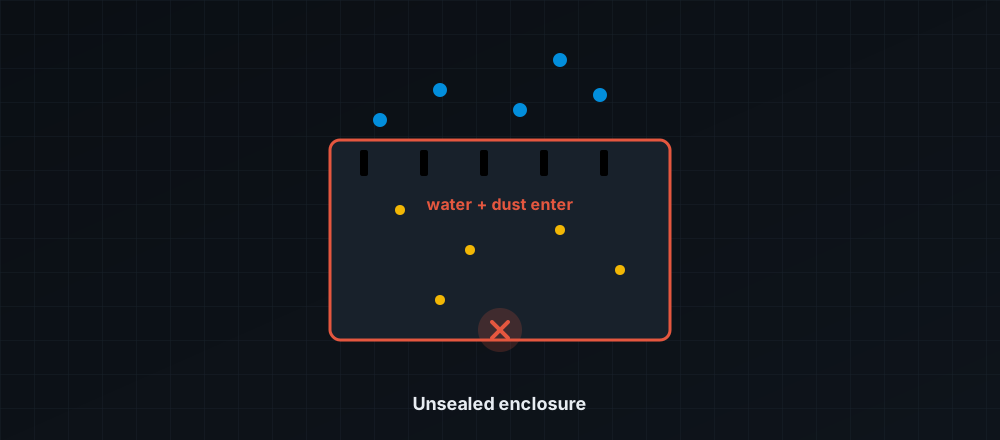
 UnsealedIP-sealed
An unsealed enclosure lets water and dust reach the electronics; a sealed IP-rated unit keeps them out. · drag to compare
| Rating | Protects against | Typical use |
|---|---|---|
| IP65 | Dust-tight + low-pressure jets | General industrial front bezels, indoor dusty areas |
| IP66 | Dust-tight + powerful jets | Hose-down areas, outdoor kiosks, marine decks |
| IP67 | Dust-tight + temporary immersion | Occasional submersion, wet outdoor installs |
| IP68 | Dust-tight + continuous immersion | Submerged or deep-wet applications |
| IP69K | Dust-tight + high-pressure hot washdown | Food, beverage, pharma sanitation |
A front bezel and the full enclosure can carry different ratings. A panel PC is often 'IP65 front / IP54 rear' — great when the back sits inside a sealed cabinet, but check both numbers if the whole unit is exposed.
How to choose
Match the rating to the worst realistic exposure: dust and the occasional wipe → IP65; hose-down → IP66; immersion or outdoor → IP67/68; hot high-pressure sanitation → IP69K. Then confirm the enclosure material and sealed connectors that back the number up. For washdown specifically, see our deep dive on IP69K vs IP67 vs IP66 and how it compares to NEMA ratings. Browse sealed stainless steel computers such as the TS-7010-22.
The bottom line
An IP rating is two independent measurements — dust then water — not a single ladder, so read both digits and match them to the specific hazards of your environment. IP65/66 for dust and jets, IP67/68 for immersion, IP69K for washdown. Specify the rating your environment actually produces, verify the sealing behind it, and you'll buy hardware that lasts.
Frequently asked questions
What does IP stand for in IP rating?
IP stands for Ingress Protection, defined by IEC 60529. The two digits after it rate protection against solids/dust (first digit, 0-6) and water (second digit, 0-9K).
What is the difference between IP65, IP66 and IP67?
IP65 is dust-tight and resists low-pressure jets; IP66 adds resistance to powerful jets; IP67 is dust-tight and survives temporary immersion. They protect against different water hazards, not simply 'more.'
Is a higher IP rating always better?
Not necessarily. The digits are independent, so IP67 (immersion) doesn't guarantee IP69K (high-pressure washdown). Choose the rating that matches your actual hazard rather than the biggest number.
What is IP69K?
The highest washdown rating, defined by ISO 20653: dust-tight plus resistance to close-range, high-pressure (80-100 bar), high-temperature (~80 °C) water jets — required for sanitation environments like food and pharma.
What does 'IP65 front' mean on a panel PC?
It means only the front bezel is rated IP65; the rear may have a lower rating. That's fine when the back sits in a sealed cabinet, but check the full-enclosure rating if the whole unit is exposed.