Blog
How to Build: Scale-Out Strategies for Edge AI deployments across Multi-site Clinics using TM-4433-10 Compact Medical Computer
Teguar Engineering Team · December 6, 2025
An engineering guide showing how to implement scale-out strategies for edge ai deployments across multi-site clinics on Teguar's purpose-built TM-4433-10 Compact Medical Computer with ai solutions architecture.
title: "How to Build: Scale-Out Strategies for Edge AI deployments across Multi-site Clinics using TM-4433-10 Compact Medical Computer" excerpt: "An engineering guide showing how to implement scale-out strategies for edge ai deployments across multi-site clinics on Teguar's purpose-built TM-4433-10 Compact Medical Computer with ai solutions architecture." date: "2026-07-07" skill: "AI Solutions Architecture" hardware_name: "TM-4433-10 Compact Medical Computer" hardware_img: "10-inch-medical-computer-tm-4433-10.jpg" hardware_type: "medical-panel-pc"
Executive Summary
An engineering guide showing how to implement scale-out strategies for edge ai deployments across multi-site clinics on Teguar's purpose-built TM-4433-10 Compact Medical Computer with ai solutions architecture.
Deploying AI models across a single clinic is relatively simple. However, scaling those deployments across a network of 50+ clinics—each with different networking setups, hardware setups, and on-site staff—requires a robust scale-out engineering strategy. This guide covers how to architect and manage containerized AI deployments using the TM-4433-10 Compact Medical Computer as the standard edge node.
Scaling Edge AI Challenges
Edge deployments suffer from three main scaling challenges:
- Configuration Drift: Over time, individual edge nodes end up with different OS patches, drivers, and model weights, leading to inconsistent AI behavior.
- Network Variances: Clinics often use varying WAN connections, making high-bandwidth updates difficult.
- Lack of On-Site IT: Edge nodes must be simple to maintain, with automated recovery, update, and rollback capabilities.
graph TD
    A[Central Git Repository] -->|GitOps push config| B[Central Kubernetes Controller]
    B -->|Deploy updates over WAN| C[Clinic A - TM-4433-10]
    B -->|Deploy updates over WAN| D[Clinic B - TM-4433-10]
    C -->|Run containerized AI| C
    D -->|Run containerized AI| D
The Role of the TM-4433-10 Compact Medical Computer
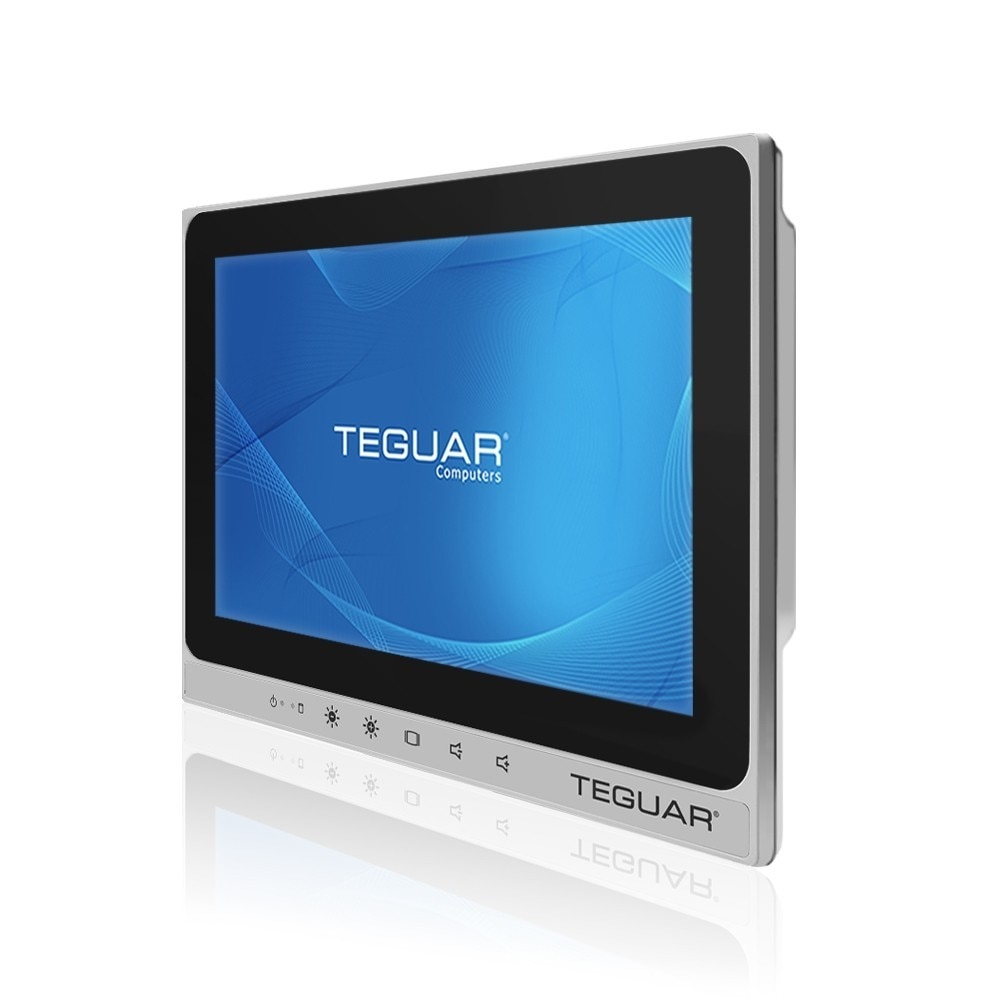
The TM-4433-10 Compact Medical Computer is built to serve as a standardized, reliable, and compact edge computer. Its fanless structure, robust passive thermals, and standard mounting options allow it to fit easily into cabinet or wall setups. By standardizing on this hardware, IT teams can build a unified operating system image, ensuring consistent behavior across all deployment locations.
Scale-Out Architecture Strategy
1. Infrastructure as Code (IaC) & GitOps
Define the entire edge node setup (OS, network rules, container runtime, model configs) in a Git repository. Use tools like ArgoCD or lightweight Kubernetes engines (K3s) to automatically pull changes.
2. Containerized Model Microservices
Run the AI inference pipeline in Docker containers. This keeps the application isolated from the host OS, making updates simple and reliable.
3. Delta Updates for Model Weights
Since deep learning weights can exceed several gigabytes, configure the node to download only the weight updates (deltas) instead of downloading the entire model image during a release.
Automated GitOps Synchronization Script
The following Python script runs on each TM-4433-10 Compact Medical Computer node to verify local container versions against a central deployment registry and apply required updates:
import subprocess
import requests
import json
import time

REGISTRY_URL = "https://registry.hospital-group.org/api/v1/edge-node-spec"
CURRENT_VERSION = "v1.2.0"
NODE_ID = "CLINIC_NORTH_4433"

def check_for_updates():
    try:
        response = requests.get(f"{REGISTRY_URL}?node_id={NODE_ID}", timeout=5)
        if response.status_code == 200:
            target_spec = response.json()
            target_version = target_spec.get("required_version")
            image_url = target_spec.get("image_url")

            if target_version != CURRENT_VERSION:
                print(f"Update found: Upgrading {CURRENT_VERSION} -> {target_version}")
                apply_upgrade(image_url, target_version)
            else:
                print("Edge node software is up to date.")
    except Exception as e:
        print(f"Error checking system updates: {e}")

def apply_upgrade(url, version):
    # Pull new Docker image
    subprocess.call(["docker", "pull", url])
    # Stop existing inference container
    subprocess.call(["docker", "stop", "edge-inference"])
    subprocess.call(["docker", "rm", "edge-inference"])
    # Run new version
    subprocess.call([
        "docker", "run", "-d", "--name", "edge-inference",
        "--restart", "always", "-p", "8000:8000", url
    ])
    print(f"Upgrade to version {version} completed successfully.")

if __name__ == "__main__":
    while True:
        check_for_updates()
        time.sleep(300)  # Check every 5 minutes
Conclusion
A structured scale-out architecture allows hospitals to expand their AI deployments reliably and securely. By pairing containerized orchestration with the rugged, fanless TM-4433-10 Compact Medical Computer, healthcare IT teams can support hundreds of clinical sites with minimal overhead.