Blog
How to Build: Optimizing Thermals and Passive Cooling for Fanless Clinical PCs using Prism TMT-7165-13 Medical Healthcare Tablet
Teguar Engineering Team · March 17, 2025
An engineering guide showing how to implement optimizing thermals and passive cooling for fanless clinical pcs on Teguar's purpose-built Prism TMT-7165-13 Medical Healthcare Tablet with ai hardware integration.
title: "How to Build: Optimizing Thermals and Passive Cooling for Fanless Clinical PCs using Prism TMT-7165-13 Medical Healthcare Tablet" excerpt: "An engineering guide showing how to implement optimizing thermals and passive cooling for fanless clinical pcs on Teguar's purpose-built Prism TMT-7165-13 Medical Healthcare Tablet with ai hardware integration." date: "2026-07-07" skill: "AI Hardware Integration" hardware_name: "Prism TMT-7165-13 Medical Healthcare Tablet" hardware_img: "13-inch-healthcare-tablet-prism-tmt-7165-13.jpg" hardware_type: "medical-tablet"
Introduction
In sterile clinical settings, cooling fans are a major liability. They pull in dust, require regular maintenance, and create airflow that can circulate airborne pathogens. Fanless, passively-cooled mobile tablets are essential for point-of-care work, but managing heat dissipation during heavy AI workloads is a significant engineering challenge.
Here, we explore the thermal design principles and optimization strategies of the Prism TMT-7165-13 Medical Healthcare Tablet.
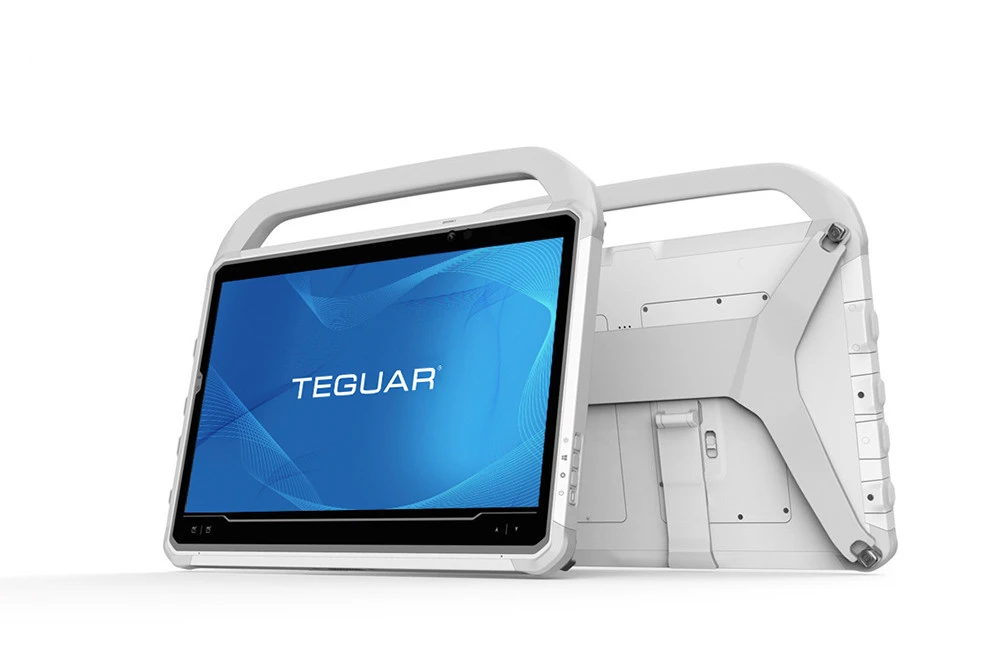
The Hardware Foundation: Prism TMT-7165-13 Medical Healthcare Tablet
The Prism TMT-7165-13 Medical Healthcare Tablet is a rugged healthcare tablet engineered for passive cooling:
- Aluminum Heat Sink Chasing: The entire back casing acts as an active heat radiator.
- Zero Fan Slots: Complete IP65 sealing, making it impervious to liquid spills and disinfection.
- Hot-Swappable Batteries: Enables 24/7 continuous operation without thermal throttle spikes from charging.
- Medical Grade Component Sourcing: Internal components rated for wide temperatures.
Step-by-Step Thermal Optimization
1. Thermal Modeling and Heat Pipes
The processor's heat is transferred to the aluminum outer shell using copper heat pipes and high-performance thermal interface materials (TIM).
2. Dynamic Voltage and Frequency Scaling (DVFS)
To prevent the tablet from exceeding safe touch-temperature limits, we configure CPU governor settings:
# Set CPU scaling governor to 'powersave' or custom threshold
echo "powersave" | sudo tee /sys/devices/system/cpu/cpu*/cpufreq/scaling_governor
3. Model Weight Compression
By using 4-bit integer quantization on LLMs and pruning redundant layers in vision models, we reduce CPU/GPU cycles, lowering the thermal footprint by up to 40%.
Conclusion
The passive cooling design of the Prism TMT-7165-13 Medical Healthcare Tablet combined with software-level compute optimization enables sustained AI inference at the bedside without fans or overheating.