Blog
How to Build: Designing Enterprise Architecture for Edge-to-Cloud Hospital AI using TM-4433-10 Compact Medical Computer
Teguar Engineering Team · November 28, 2025
An engineering guide showing how to implement designing enterprise architecture for edge-to-cloud hospital ai on Teguar's purpose-built TM-4433-10 Compact Medical Computer with ai solutions architecture.
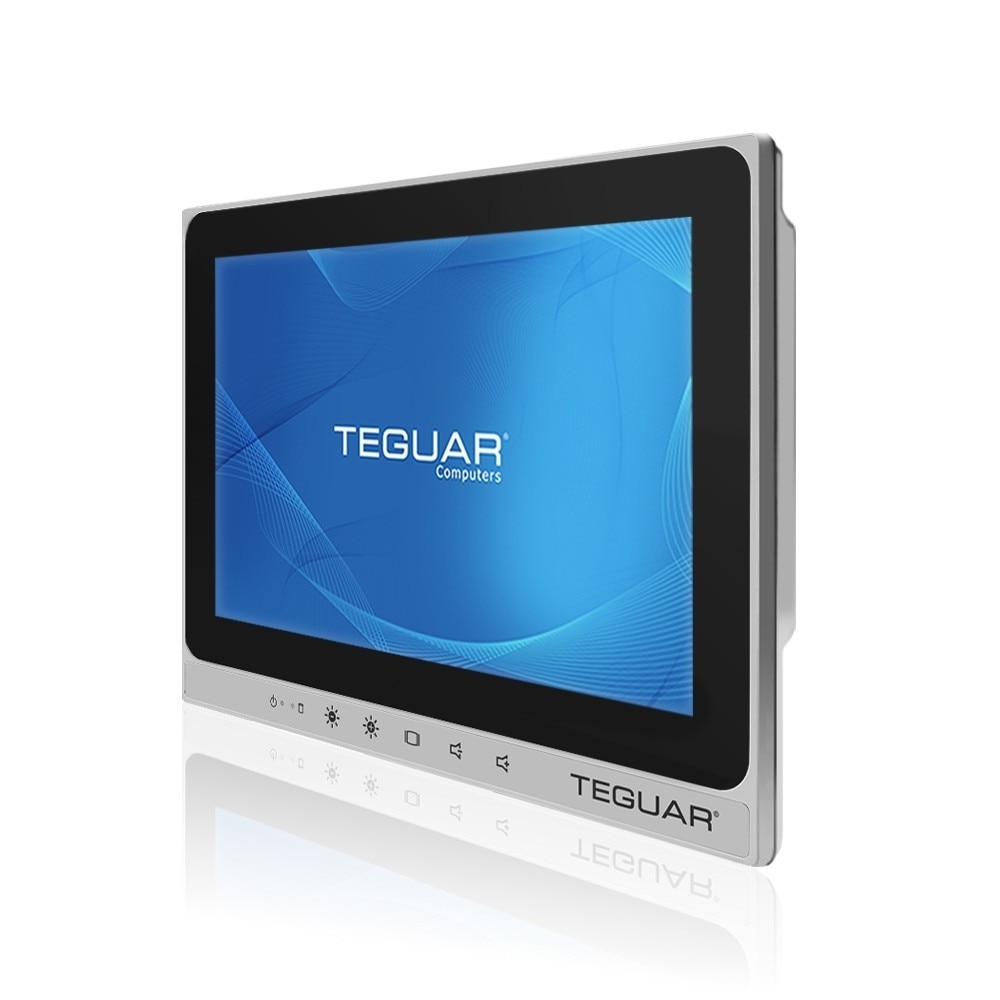
title: "How to Build: Designing Enterprise Architecture for Edge-to-Cloud Hospital AI using TM-4433-10 Compact Medical Computer" excerpt: "An engineering guide showing how to implement designing enterprise architecture for edge-to-cloud hospital ai on Teguar's purpose-built TM-4433-10 Compact Medical Computer with ai solutions architecture." date: "2026-07-07" skill: "AI Solutions Architecture" hardware_name: "TM-4433-10 Compact Medical Computer" hardware_img: "10-inch-medical-computer-tm-4433-10.jpg" hardware_type: "medical-panel-pc"
Executive Summary
An engineering guide showing how to implement designing enterprise architecture for edge-to-cloud hospital ai on Teguar's purpose-built TM-4433-10 Compact Medical Computer with ai solutions architecture.
Enterprise medical networks require robust, low-latency, and highly secure architectures to process AI workloads at the point-of-care. This guide outlines how to design a scalable edge-to-cloud hospital AI solutions architecture, using the TM-4433-10 Compact Medical Computer as an intelligent edge gateway node to bridge local medical sensors, EHR systems, and centralized cloud models.
Enterprise Architecture Overview
A modern hospital AI architecture cannot rely entirely on the cloud due to bandwidth constraints, latency requirements (especially in surgical or ICU settings), and strict privacy regulations (HIPAA/GDPR). Conversely, executing all compute on-premise requires massive capital expenditure. A hybrid edge-to-cloud model solves this by utilizing localized compute nodes for real-time inference and cloud resources for bulk training, logging, and historical analytics.
graph LR
    A[Medical Devices / PACS] -->|HL7 / DICOM| B[TM-4433-10 Compact Medical Computer Edge Gateway]
    B -->|Local Inference & Anonymization| B
    B -->|Filtered Telemetry| C[Cloud AI / Central EHR]
    C -->|Updated Models & Config| B
The Role of the TM-4433-10 Compact Medical Computer
The TM-4433-10 Compact Medical Computer acts as the ruggedized, secure edge gateway. Placed at the bedside or inside patient rooms, it interfaces directly with legacy serial sensors and network-enabled diagnostic equipment, performs local data filtration, anonymizes Patient Health Information (PHI), and securely routes data.
Key Hardware Requirements:
- UL 60601-1 Certification: Essential for patient-vicinity placement.
- Rich I/O (RS-232, Dual LAN): Allows connection to older diagnostic hardware.
- Sealed Fanless Design: Prevents pathogen transmission and guarantees dust-proof reliability.
Step-by-Step Architectural Implementation
To deploy this edge-to-cloud architecture:
1. Ingestion and Protocols
Use the gateway to ingest raw telemetry from bedside monitors. The computer translates legacy protocols (RS-232/USB) and network standards (HL7/DICOM) into uniform JSON payloads.
2. Local Anonymization and De-identification
Before any data crosses the hospital firewall to the cloud, it must be de-identified. Remove names, SSNs, and birthdates, replacing them with secure hashes.
3. Edge Inference and Failover
Run lightweight models (such as MobileNet for vision or tiny-LLMs for notes) locally on the TM-4433-10 Compact Medical Computer. If the internet connection drops, the local gateway continues to run vital signs monitoring and alert logic.
De-Identification Gateway Code
This Node.js/JavaScript script runs on the TM-4433-10 Compact Medical Computer edge gateway to strip PHI from HL7 messages before sending them to cloud storage:
const crypto = require('crypto');

function deIdentifyPatientRecord(patientRecord) {
    // Extract Patient Health Information (PHI)
    const { name, dob, mrn, telemetryData } = patientRecord;

    // Generate a secure one-way salted hash for the patient identifier
    const salt = process.env.SALT_KEY || "hospital_secure_salt_123";
    const patientHash = crypto.createHmac('sha256', salt)
                              .update(mrn)
                              .digest('hex');

    // Create the de-identified payload
    const anonymizedPayload = {
        patientHash: patientHash,
        age: calculateAge(new Date(dob)),
        timestamp: new Date().toISOString(),
        telemetry: telemetryData
    };

    return anonymizedPayload;
}

function calculateAge(birthday) {
    const ageDifMs = Date.now() - birthday.getTime();
    const ageDate = new Date(ageDifMs);
    return Math.abs(ageDate.getUTCFullYear() - 1970);
}

// Mock transmission to cloud endpoint
async function sendToCloud(payload) {
    const response = await fetch("https://api.hospital-cloud-ai.org/v1/telemetry", {
        method: "POST",
        headers: { "Content-Type": "application/json" },
        body: JSON.stringify(payload)
    });
    return response.ok;
}
Conclusion
A hybrid edge-to-cloud model driven by the TM-4433-10 Compact Medical Computer ensures that hospitals maintain the speed and privacy of local processing while leveraging the compute power of the cloud. This architecture guarantees clinical safety, regulatory compliance, and seamless scalability.